.svg)

Mature Clinical Labeling Models and Language Excellence
Reduce rework and approval latency to enable faster, scalable, and more predictable study start-up.


Case Study: Multilingual Retail Marketing
New AI Content Creation Solutions for a Sports and Apparel Giant
- RESOURCES

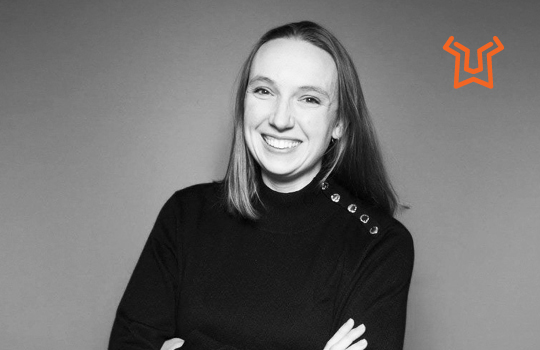



“If you have internal LLMs or AI solutions [in development], we encourage you to use them… [and] find out what type of content they are [best suited for]. We are happy to help you in that journey by [giving you an] understanding of the outputs you can expect from your own solution"
— Simone Lamont, VP Global Solutions
Feeling lost in translation? As Large Language Models (LLMs) rapidly advance, businesses are exploring new ways to use them to automate and scale translation. Yet, many stumble when it comes to actual LLM outcomes — which can mean the difference between a successful generative AI project and an expensive, abandoned experiment.
During our webinar, “Lost in Translation?”, Simone Lamont, Lionbridge’s VP of Global Solutions, explored the main challenges organizations encounter when using LLMs for translation projects and how to overcome them to achieve high-quality multilingual content.
Want to watch the webinar in its entirety? Use the button below to access the recording.
Organizations everywhere are launching AI projects and integrating LLMs into their workflows. The excitement is real, but so is the disappointment.
In fact, 72% of AI projects are abandoned before delivering value. Why? Translation quality falls short, hallucinations and misinterpretations are common, and internal teams lack the expertise to customize LLMs for each target language.
What Are the Quality Concerns and Realities of AI Solutions?
LLMs promise speed and scale, but without careful setup, they can produce errors that harm stakeholder and brand credibility.
Organizations report issues such as mistranslated brand names, errors in the handling of numbers and measurements, and inconsistent terminology — especially when LLMs are trained in-house but lack proper linguistic assets.
Another challenge is the time and skill needed for effective prompt engineering. Customizing solutions for languages such as Chinese, German, or French requires both technical and linguistic expertise, which many teams lack. Even when AI-driven translation works for small-scale projects, it isn’t easy to scale up enterprise workflows.

How Do Pre-Trained LLMs Compare With MT Solutions for Translation?
Is out-of-the-box ChatGPT — or any LLM — good enough for enterprise translation? Benchmarking by the Lionbridge Machine Translation Tracker shows that standard, pre-trained LLMs typically underperform translations when compared with traditional Machine Translation engines and hybrid solutions. Fine-tuning and Retrieval-Augmented Generation (RAG) improve quality. Still, it’s crucial to know when and how to use these techniques and how to test the outcomes before making AI-driven solutions available to your organization.
How Should Your Content Type Dictate Quality Level?
Not all content needs the same level of translation quality. The webinar highlighted the importance of mapping workflows to content risk and business needs. For example, a marketing press release demands high accuracy and brand consistency, while a quick website update might tolerate minor awkwardness.
A hospital bed manual and a pacemaker manual have drastically different accuracy requirements.
For medical and legal documents, zero mistakes are non-negotiable.
Speed and cost may outweigh the need for perfection for other types of content.
Understanding your content is essential. Lionbridge’s REACH framework asks you to consider ROI, engagement, audience, and control to determine the right approach and the amount of human in the loop needed for each use case. Is the content for informational purposes only? Is it specialized, regulated, or high-impact content? These questions shape your workflow decisions — from LLM-driven translation with no human review to full expert validation.
How Can Customization and Human Review Improve Translation Workflows?
Customization matters. Our AI-first platform, Lionbridge Aurora AI™, leverages Translation Memories (TMs), glossaries, dynamic prompts, and LLMs for post-editing. This approach reduces human effort while boosting translation quality. You can customize the tone, style, and terminology for each use case — even for less common languages.
Simone stressed the importance of ongoing evaluation. Lionbridge provides automated assessments that analyze translation quality based on terminology, accuracy, style, locale conventions, and audience relevance. These scorecards help organizations identify the strengths and weaknesses of their AI solutions, enabling targeted enhancements.

How Can You Evaluate and Improve LLM Performance?
How do you know if your AI solution is up to the task? The webinar offered practical steps for evaluating LLM performance and translation quality:
Start by assessing your current workflows. Compare LLM or Machine Translation output to human translation.
Use Lionbridge’s automated quality assessments to pinpoint areas for improvement — terminology, style, accuracy, and more.
Map different content types to appropriate AI workflows, balancing cost, turnaround time, and acceptable error rates.
Lionbridge’s evaluation service helps organizations take the guesswork out of LLM performance. By submitting samples of translated content, teams receive a comprehensive scorecard and actionable insights. This data empowers businesses to use internal LLMs with confidence for specific low-risk content and to seek professional support for high-stakes projects.
What Are the Key Webinar Takeaways?
This webinar provided insights into how to maximize performance when your LLM misses the mark. Here are the main points.
LLM performance varies greatly depending on the LLM translation solution, associated language assets, and level of customization.
Not all content requires the same translation quality — match your workflow to the required outcomes of the content, while balancing cost, turnaround time, and risk.
Out-of-the-box LLMs tend to underperform compared to fine-tuned or hybrid solutions.
Custom prompts, glossaries, and Translation Memories (TMs) improve translation quality.
Human review is still critical for high-risk or regulated content.
Assess your AI solution’s strengths and weaknesses with objective data to make informed decisions.
Lionbridge offers automated assessments to help organizations evaluate their LLM translation outputs
Interested in exploring other AI-related webinar topics Lionbridge has delved into? Visit the Lionbridge webinars page for a library of webinar recordings.
Get in touch
Ready to achieve reliable LLM performance with the translation quality your organization seeks? Lionbridge can help you assess, optimize, and customize your projects for AI success. Reach out today to get started.
Note: The Lionbridge Content Remix App initially created the recap blog, which a human then refined.


