.svg)

Mature Clinical Labeling Models and Language Excellence
Reduce rework and approval latency to enable faster, scalable, and more predictable study start-up.


Case Study: Multilingual Retail Marketing
New AI Content Creation Solutions for a Sports and Apparel Giant
- RESOURCES




Ensure Expert-led Advanced Prompt Engineering
Involve Multidisciplinary Subject Matter Expertise
Define a Plain Language Strategy for your Clinical Development Plan
Plain language summaries (layperson summaries) of clinical trial results are a key component of building trust with clinical research volunteers, patients, and the public at large. Plain language communication is not only preferred by most readers; it also drives more effective and better outcomes. In clinical trials, plain language summaries thank trial volunteers and provide them with a summary of trial results in accessible language.
Producing timely, high-quality, and compliant plain language summaries is a challenge for many trial sponsors. This blog offers three expert tips for accelerating and improving plain language summaries by leveraging advanced prompt engineering, ensuring the right subject-matter expertise, and integrating plain language summaries into your clinical development plan.
Plain Language Summaries Tip 1: Ensure Expert-led Advanced Prompt Engineering
Many trial sponsors are cautious about using AI to create plain language summaries due to concerns about results integrity, bias, and compliance. Generative AI has well-known limitations in providing reproducible, reliable results. Without proper controls and the necessary human intervention, LLMs may hallucinate and generate varying output from one iteration to the next, even when fed the same input. In the plain language summation process, LLMs could:
- Make up erroneous data
- Misrepresent results
- Include undesirable terminology, tone, or style
Successfully leveraging AI for plain language summaries without impacting the integrity of the clinical study results requires:
- A clear and well-defined use case defining scope, outcomes, and performance criteria
- Advanced prompt engineering with detailed, section-specific instructions to drive accurate, compliant summation of the clinical trial results
- Built-in plain language communication standards, controlled terminologies, and EU Clinical Trial Regulation (CTR) requirements

Following these recommendations, sponsors can significantly accelerate drafting plain language summaries and alleviate the burden on medical writers during an intense trial reporting phase. In the EU, the plain language summary must be submitted after the protocol-defined End of Trial by these timeframes:
- Adult trials: one year
- Pediatric trials: six months
The summary relies on the scientific research report, which can take months to develop. As a result, sponsors may end up with a tight window for finalizing and translating the plain language summary.
Plain Language Summaries Tip 2: Involve Multidisciplinary Subject Matter Expertise
The International Plain Language Federation defines plain language as communication in which the “wording, structure, and design are so clear that the intended readers can easily find what they need, understand what they find, and use that information.” This definition has been adopted by the International Standards Organization in ISO 24495-1:2023 on Plain Language, Governing principles and guidelines. Plain language is a field unto itself, requiring language expertise and knowledge about related topics like health literacy principles and plain language principles.
Due to the complexity of plain language communication, as well as the complexity and risks involved in clinical results reporting, AI-powered plain language summaries cannot be developed solely by Data Scientists. Both linguistic, regulatory, and clinical research expertise are required to ensure a correct, compliant, and non-promotional summary. Additionally, scientific and medical writers often underestimate the challenge of transforming scientific to plain language.

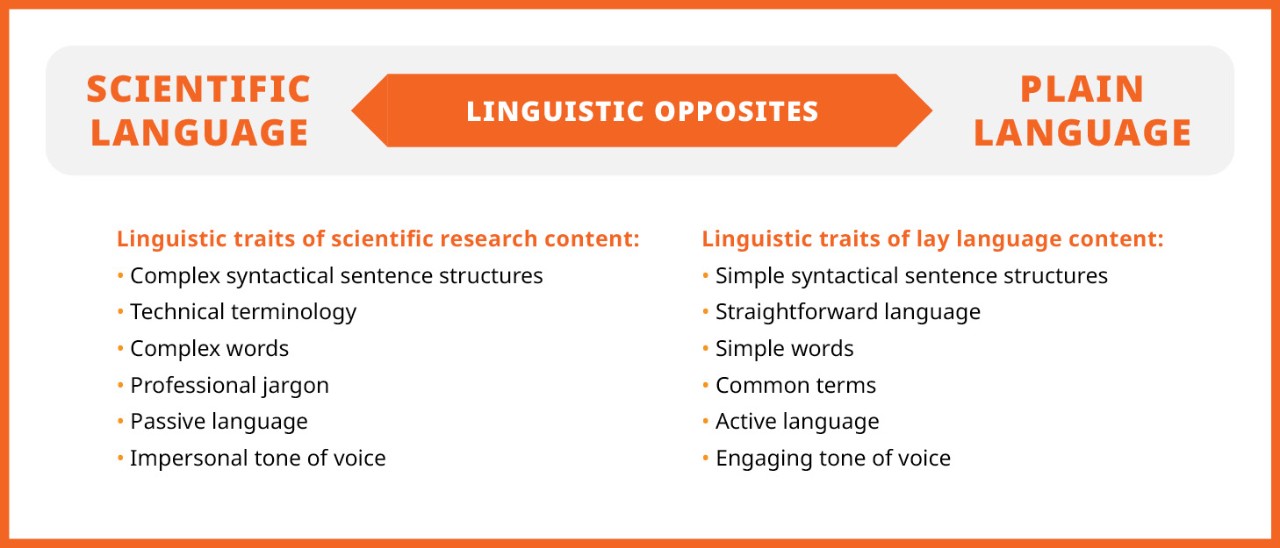
There are significant linguistic differences between scientific and plain language conventions. In contrast to results-focused scientific reporting, plain language communication must primarily focus on the intended reader: their skills and their knowledge. Plain language writing focuses on the reader: their needs, wants, interests, and literacy levels.
When transforming a scientific text into plain language, it’s crucial to appreciate these differences and have the skills to transform scientific language into everyday language suitable for a sixth to eighth-grade reading level.
Plain Language Summaries Tip 3: Define a Plain Language Strategy for your Clinical Development Plan
To obtain speed, quality, and return on investment across clinical content in plain language summaries, trial sponsors should build language assets and prompt templates from the first clinical trial in the global clinical development plan. End-to-end language strategies can cut costs and timelines in half, while ensuring better language outcomes for patients and greater patient engagement. Lionbridge offers language consultancy for life sciences customers to consolidate language assets and drive speed, cost savings, and better language outcomes.
Get in touch
Looking for expert-led, AI-powered, compliant plain language solutions for creating plain language summaries and improving readability of plain language communication? Lionbridge Aurora AI Plain Language™ offers a unique combination of regulatory compliance, plain language standards, and purpose-built prompt engineering. It enables trial sponsors to outsource plain language outcomes to Lionbridge and focus on scientific writing. Let’s get in touch to discuss how our life sciences translation services team can help.


