.svg)

Better Patient Outcomes with Epic Language Access Integration
Learn how to improve health outcomes and ensure compliance for individuals with Limited English Proficiency (LEP) with direct language access integration to the Epic Electronic Health Record (EHR) system.


Case Study: Multilingual Retail Marketing
New AI Content Creation Solutions for a Sports and Apparel Giant

Human Expertise Blended With Powerful AI
Lionbridge Aurora AI™ is an AI-first global content platform that increases your multilingual content creation and expands your audience with culturally relevant, hyper-personalized content.
- RESOURCES





The terms translation services and localization services are often used interchangeably, and it's not uncommon for marketers and others to be unaware of the differences between them. Understanding what distinguishes these similar terms, processes, and services goes beyond enhancing your industry knowledge. It also helps you extend your website's reach more efficiently and profitably.
Moreover, the rapid advancement of AI technology is transforming the delivery of website localization. Lionbridge enables customers to achieve unprecedented gains in efficiency, speed, and cost by combining AI with human expertise. Learn more about our AI-powered solutions: Lionbridge Aurora AI™, our content orchestration platform; Lionbridge Content Remix for multilingual content creation and transcreation (an advanced form of localization); and AI post-editing, which reduces human effort while delivering cultural resonance at scale. We use a variety of approaches, including translating low-value pages, localizing higher-value pages, and optimizing landing pages to meet varying content quality requirements.
To understand how website translation and localization services differ, let’s first define them.
Translation vs localization: what’s the difference?
Translation is the process of changing your text into another language, but localization is far more wide-reaching. It considers the cultural, visual and technological aspects of changing a site for users in different languages. In fact, translation can be considered as just one part of the localization process.
Let’s explore in more detail.
Website Translation
Website translation is the process of changing an original, source language version of web content such as text, multimedia, eBooks or apps into a different, target language.
For your website, this means that a translation project will only change the existing content on your site for accurate sentences in another language. Translated content should mirror the style and tone of your source content, while keeping in mind the context.
Website Localization
Website localization is a more specialized process of adapting your web content and applications for consumption in a specific region. It goes beyond translation, modifying the content and other site elements to appeal to the customer’s cultural preferences in their own language.
A localization project would have a more far-reaching impact on your website. It might modify the tone of your content and change certain idioms or expressions to take cultural differences into account. Visual elements such as buttons might also need changing or expanding to accommodate different word and phrase lengths in other languages. There may even be some technological changes to make the site easier for international visitors to navigate.
Why is website localization important?
With translation, problems of intent and clarity often arise if the source language remains in a primitive, word-for-word state. This can happen, for example, when Machine Translations aren’t followed by a professional editing cycle. However, even if a highly trained linguist translates a website's source language, the translation may still lack the level of cultural and technical nuance required to effectively resonate with the new market.
Indeed, the quality and effectiveness of a global website doesn't simply depend on the translation process alone. To help ensure a quality customer experience, the top global brands employ a localization strategy to adapt their online assets for regional specificity. So, we can understand website translation services as a simple utility for bridging language barriers. Conversely, we can view website localization as the way by which you refine your message to meet the cultural, functional and language expectations of your global markets.
Cultural and Functional Content
According to Dr. Nitish Singh, Associate Professor of International Business at Saint Louis University, to successfully compete in today's global economy organizations must adapt—or localize—website and digital media content to clearly resonate with their international audiences. "From a broad marketing perspective," says Singh, "localization basically means adapting market offerings to best meet end-user expectations." (Singh, 2015, pg. 7)*
Some examples of cultural content include:
Colors, shapes, sizes and styles
Images, icons and graphics
Societal codes; e.g., humor, etiquette, rituals, myths and symbols
Societal values, power, relationships and beliefs
Some examples of functional content include:
Date and time formats, telephone numbers and contact information
Weights, measurements and geographical references
Language and linguistic content, product descriptions, currency, and reviews
Taking a Local Idea Global
Some localization experts go beyond adapting web content so it caters to national or regional market preferences. In some cases, experts recreate or transcreate advertising and campaign messaging to maximize cultural appeal in local markets—and avoid potentially embarrassing or offensive communications.
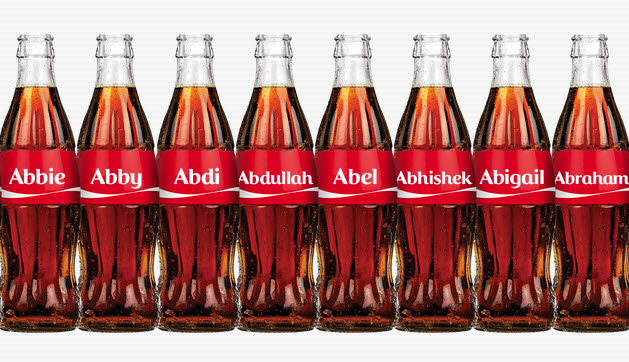
One example of transcreation is Coca-Cola's "Share a Coke" campaign. Since its 2011 Australian launch that featured imprinting 150 popular first names onto its products, the campaign has seen global success. However, Coke needed to modify the execution in order to resonate globally.
In China, for example, the campaign uses nicknames like "Classmate" and "Close Friend" instead of first names. By respecting the formality with which the Chinese customer uses first names, this approach maintains the campaign's friendly nature but avoids crossing an important cultural boundary.
Translation vs localization: which should I choose?
Website translation and localization differ on a tactical level. Simple translation may be appropriate for some content types in certain markets. Localization is most often required for adapting highly emotive creative marketing content so it clearly resonates across locales.
Your website likely contains several content types, from marketing copy to legal and technical information, as well as user-generated forum content. For reasons of efficiency and cost, it's wise to consider which types of content require localization and where you can simply ask for translation. For example, it might be more important to focus on creating appropriate marketing materials rather than capture the nuance of every comment made on your company’s blog.
To figure out the best fit, you should consider your audience and the content's nature and intent. Other parameters include volume, update cadence, lifespan and budgetary considerations. Depending on your Language Service Provider's (LSP) capabilities, you have several options. Your LSP should be able to advise you on which parts of your site to localize, while also employing a wide range of services to ensure that your website is fully operational in multiple languages.
Streamlining Web Translation and Localization
With sufficient planning, a focused website localization strategy and an experienced LSP to help you execute, you’ll be able to expand your website into new languages and win international customers with your perfectly adapted content. But without proper preparation, the localization process can become a time-consuming, expensive drag on your business.
That’s where Lionbridge can help. In our 25 years as a language services provider, we’ve helped everyone from Fortune 500 companies to the world’s largest e-commerce sites achieve their business goals through our translation and localization services. Follow our blog for more helpful advice on localization for your business, or contact us to get started on a project.
*From "Cultural Customization of Digital Media: An Imperative," The Definitive Guide to Website Translation, Lionbridge Technologies. Originally published on BrandQuarterly.com.


